When people think about keeping their bodies healthy, the conversation often becomes centred around pain.
How do I stop my back from hurting? How do I prevent another knee problem? How do I make sure I never injure my shoulder again?
Those are reasonable questions, but I think they can sometimes distract us from the bigger objective.
The goal of long-term physical health should not simply be to avoid every minor ache or injury. It should be to preserve our physical capacity for as much of our lives as possible.
If you are active, there will probably be periods when something feels stiff, tired, irritated, or sore. Bodies adapt to stress, and physical activity inevitably exposes us to load. That does not mean pain should be ignored, particularly if it is severe, persistent, worsening, or associated with neurological or other concerning symptoms. But occasional minor aches are not necessarily evidence that physical activity is damaging you.
A more useful question is: what qualities do I want my body to still possess decades from now?
Ideally, strength. Cardiovascular fitness. Coordination. Balance. Mobility. Reaction time. Confidence moving quickly. The ability to bend, rotate, lift, run, climb stairs, get off the floor, carry something heavy, or react when you unexpectedly lose your balance.
For that reason, I generally recommend having two or three complementary forms of physical activity in your life.

One should ideally involve dynamic movement. Sports such as tennis, padel, football, basketball, martial arts, or many forms of dance require you to react to an unpredictable environment. You accelerate, stop, rotate, change direction, coordinate your hands and feet, and constantly adjust your position.
This is valuable for the spine as well. A healthy spine should not simply be protected from movement. It should maintain the ability to tolerate movement and load in different directions.
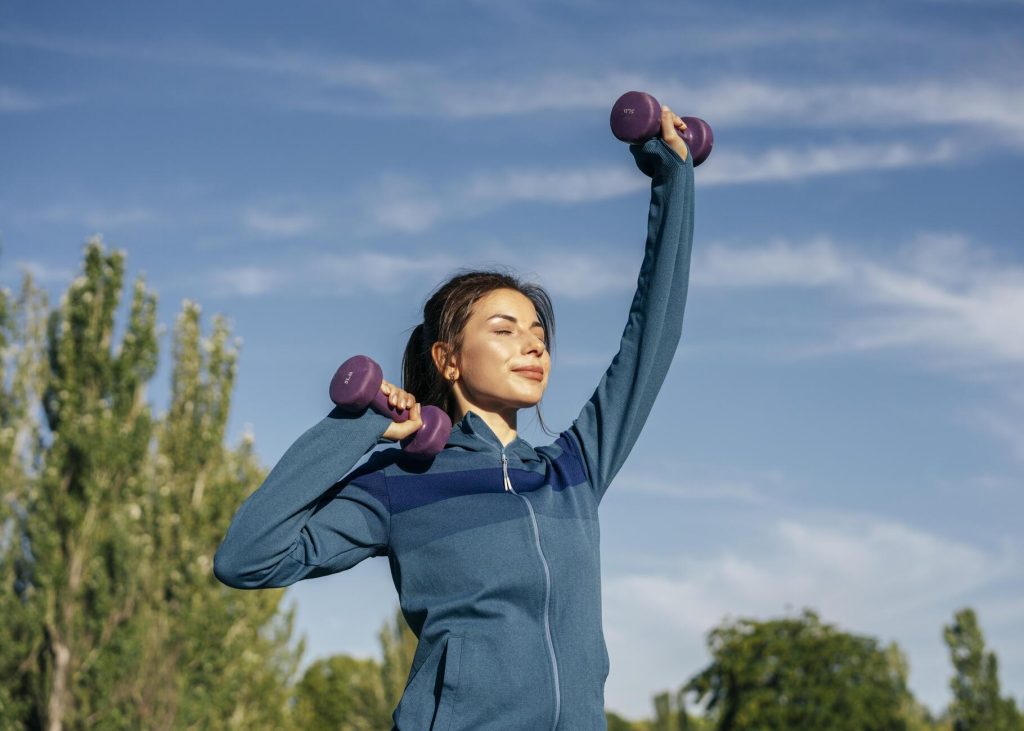
The second component is controlled strength work. Weight training, resistance training, Pilates, calisthenics, and similar activities allow us to deliberately build strength and maintain muscle. Strength gives the body reserve capacity. Everyday tasks become easier when they represent only a fraction of what your body is capable of doing.
The third component is cardiovascular exercise. Running, cycling, swimming, rowing, hiking, or sufficiently intense sport can all challenge the cardiovascular system.
These categories do not have to exist separately. A demanding tennis match, for example, may provide cardiovascular exercise while simultaneously challenging coordination, speed, reaction time, rotation, and changes of direction. Strength training can also include mobility and balance. One activity can sometimes tick several boxes.
That is why I am less interested in prescribing one supposedly perfect form of exercise.
The more important principle is variety.
Our bodies become good at what we repeatedly ask them to do. A balanced lifestyle gives the body different problems to solve: producing force, controlling movement, responding quickly, maintaining endurance, and adapting to unexpected situations.
Ultimately, the goal is not to create a body that never experiences discomfort.
It is to build one that remains capable.
Minor problems can usually be managed when they arise. The larger investment is continuing to develop enough strength, fitness, coordination, and movement capacity that you can keep doing the things you enjoy for decades to come.
