
It’s one of the most common things I hear from patients: “I stopped lifting because I didn’t want to damage my back.” “I’ve been trying to avoid anything that might cause pain.” On the surface, that sounds logical. If something hurts or might hurt, you avoid it. But when it comes to the human body, especially the spine, that instinct can quietly lead you in the wrong direction.
Ironically, the very strategy people use to avoid pain often increases the likelihood of experiencing it more frequently.
Research consistently shows that sedentary behavior is associated with higher rates of low back pain and disability. Large-scale reviews have found that inactivity increases the risk of developing chronic low back pain, with some studies suggesting sedentary individuals have ~20–25% higher odds of back pain-related disability.
On the flip side, regular physical activity, even at moderate levels, has been shown to reduce both the incidence and recurrence of back pain. In fact, replacing just one hour of daily sitting with light activity can reduce back pain risk by 2–8%.
This flips the common assumption on its head: Avoiding stress on your body doesn’t protect it; it often makes it less capable.
Your body is not a fragile system — it’s an adaptive one. When you stop moving:
Over time, your capacity to handle even basic physical demands decreases. So when you eventually do encounter stress like lifting groceries, bending over, or sitting too long, your body is less prepared to deal with it.
Pain, in this context, isn’t necessarily a sign of damage. Often, it’s a sign of deconditioning.
Here’s a mindset shift that changes everything: Pain is not something you can eliminate completely from life. If your entire strategy is built around avoiding pain at all costs, you’ll likely end up:
Instead, a more productive question is: “If some level of discomfort is inevitable, how can I build a body that handles it better?”
This doesn’t mean ignoring pain or pushing recklessly through it. The goal is not to “push through” pain; it’s to work around it intelligently.
That might mean:
You’re not trying to prove toughness — you’re trying to build capacity.
Most people with persistent pain aren’t doing too much; they’re doing too little, often out of fear.

This is where things get practical and also more individual.
One of the biggest misconceptions is that you need to train for every possible movement or
scenario. You don’t. Instead, think in terms of:
Your training should reflect that.
If you love hiking, your program should support endurance and lower-body strength.
If you play a sport, your training should complement its demands.
If your goal is simply to feel good and stay capable, your approach can be broader.
Yes. Having a base level of general physical conditioning is one of the most protective things you can do.
This means developing:
You don’t need to specialize. You need to be well-rounded. A simple, effective combination could include:
Each of these contributes something slightly different, but together, they create a more adaptable system.
Not better, just different tools.
The key isn’t picking the “best” one — it’s combining what covers your needs.
A useful principle: Train slightly beyond the demands of your daily life.
If your life occasionally requires lifting, bending, or carrying, your training should prepare you for that. This creates a buffer:
You don’t need the perfect program.
What matters most is:
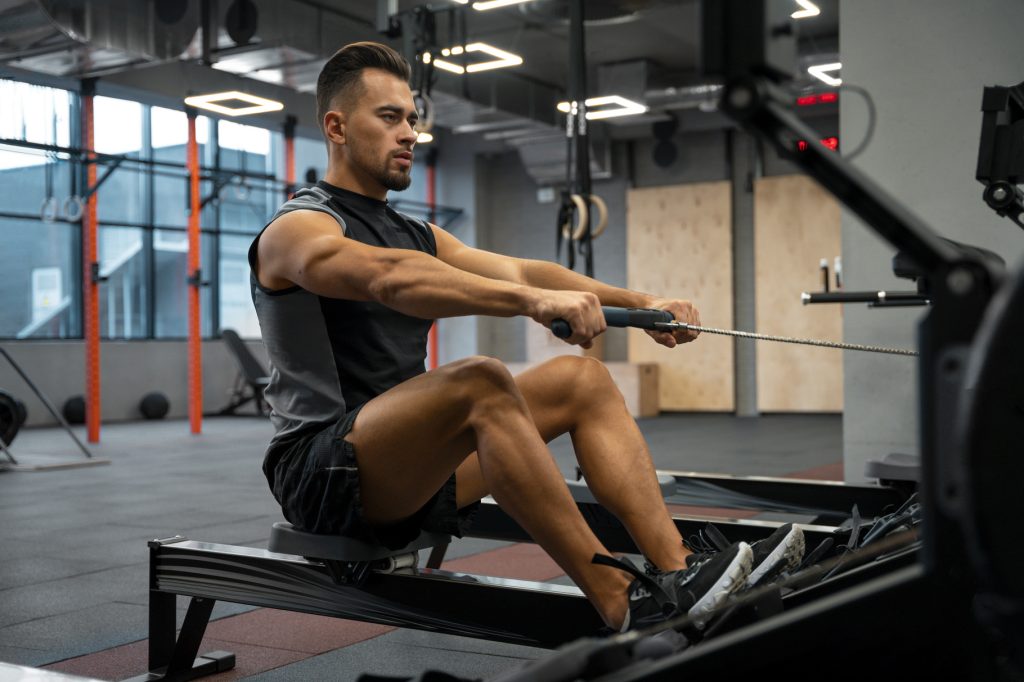
If your goal is to avoid pain completely, you’ll likely end up moving less—and experiencing more
of it.
If your goal is to build a body that can handle life, you’ll move more—and experience pain less
often, and less intensely.
You don’t need to eliminate discomfort. You need to become more capable than it. Because in the long run, it’s not avoidance that keeps you healthy, it’s adaptability.
Edited with the help of AI.
