
Chiropractic care: Why it may help, how it fits into your lifestyle, and why your care plan should adapt as you improve.
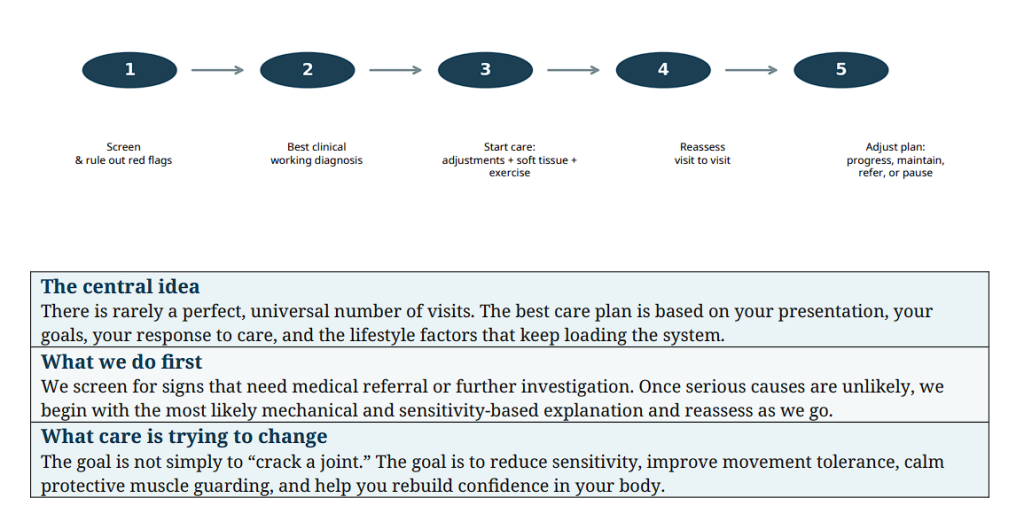
Pain is produced by the nervous system when it decides that an area needs protection. Sometimes that
protection is useful. Sometimes the system becomes overly sensitive, especially after injury, repeated irritation, stress, poor sleep, fear of movement, or long periods of physical load.
Joints that are stiff, irritated, or moving poorly can contribute to this sensitivity. Muscles around the area may tighten protectively, which can add more discomfort and make movement feel threatening. Over time, the body can get stuck in a loop: restriction, irritation, guarding, pain, avoidance, and more sensitivity.
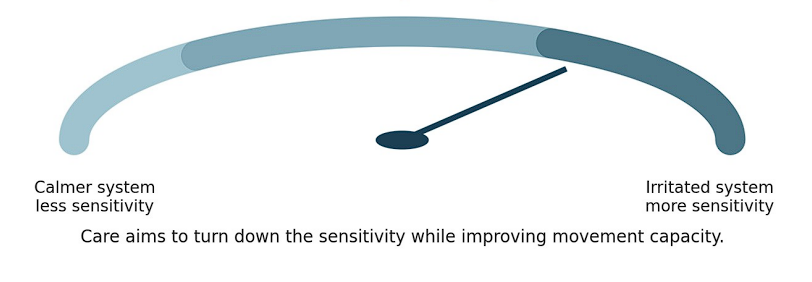
Chiropractic care can be useful as part of a broader plan, especially when pain is linked to movement sensitivity, joint restriction, muscle guarding, reduced confidence, or recurring flare-ups.
It would be easier to say, “This will take six visits,” but that is not always honest. People vary widely in
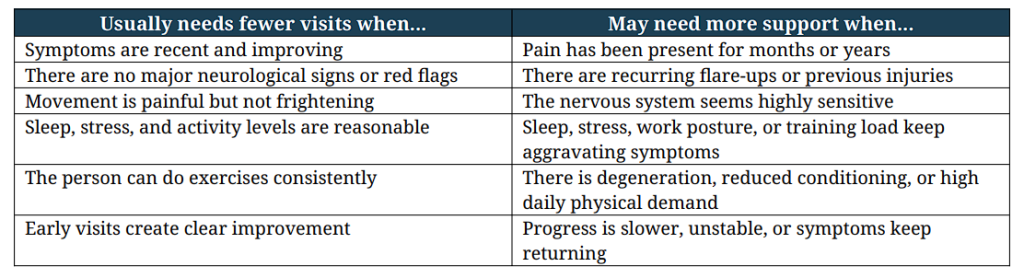
how quickly they respond. Two people can have similar pain locations but very different drivers, histories, nervous-system sensitivity, stress levels, sleep quality, training habits, work demands, and previous injuries.
A visit estimate can be useful, but it should remain flexible. The better question is not “How many visits does this condition always need?” The better question is: “How are you responding, and what should we adjust next?“.
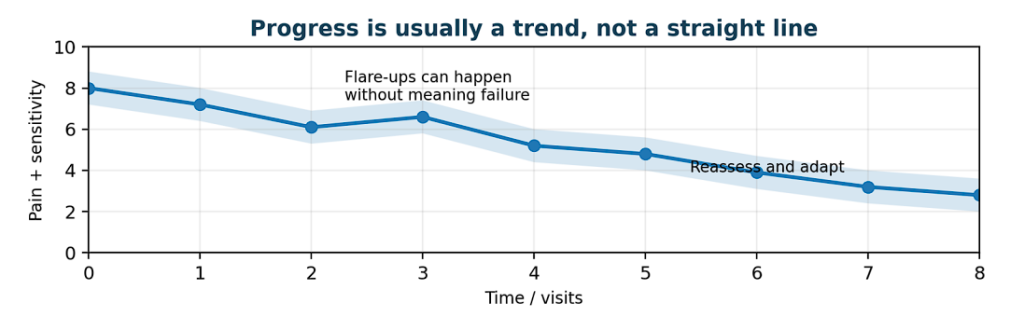

We usually begin with a short trial of care, then reassess. If you are improving, we will continue and gradually reduce dependency. If you are not improving as expected, we will change the plan, add or remove strategies, or refer for further evaluation when appropriate.
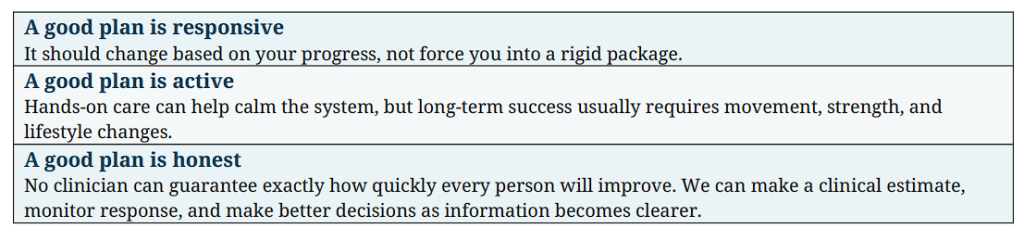
Some people do well with short-term care only. Others benefit from periodic support, especially if their lifestyle repeatedly loads the same areas or if they have a history of recurring episodes. This can include people with demanding jobs, high stress, poor sleep, previous injuries, degeneration, heavy training loads, or long periods of sitting and travel.
Long-term care should not be presented as a punishment or a permanent requirement. It should be a choice based on your goals, your history, how you respond, and whether it helps you function better.
Most back and neck pain is not dangerous, but certain signs require extra caution. Tell your clinician if you develop new or worsening neurological symptoms, unexplained weight loss, fever, history of cancer, significant trauma, night pain that does not change, loss of bladder or bowel control, saddle numbness, or progressive weakness.
Chiropractic care is not about promising a perfect number of visits. It is about starting with the most likely explanation, reducing sensitivity, improving movement, building capacity, and reassessing honestly. Your plan should become clearer as your body shows us how it responds.
Current guidelines for low back pain commonly support non-surgical care such as education, exercise, staying active, and selected manual therapies, including spinal manipulation or mobilisation. The World Health Organization includes education, exercise, and some physical therapies such as spinal manipulative therapy, among recommended non-surgical options for chronic primary low back pain. NICE recommends considering manual therapy only as part of a treatment package that includes exercise, with or without psychological therapy. Neck pain guidelines commonly support multimodal care using exercise and selected manual therapy approaches.
